
Learn how IPTV for Smart TV works, including setup, apps, internet speed, EPG, VOD, buffering, legality, buying tips and alternatives.
 Choose Your IPTV Subscription
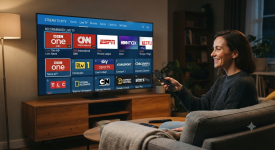
IPTV stands for Internet Protocol Television. Rather than delivering television programming through traditional broadcast, cable, or satellite signals, IPTV delivers content over an internet connection.
For Smart TV owners, IPTV can be convenient because many modern televisions support applications or external devices that can play IPTV streams. However, the experience depends on several factors, including the IPTV player, provider, internet connection, Smart TV operating system, and the content rights associated with the service.
This guide explains how IPTV works on Smart TVs, what features matter, how much internet speed you may need, how to reduce buffering, and what to check before choosing a service.
 Stream Your Favorite Content Today
A typical setup has three main components:
Before subscribing, check that the IPTV service supports your television and preferred player, understand its billing terms, and verify that the provider has appropriate rights for the content it distributes.
The television needs either a compatible IPTV application or another supported method of accessing the service. Some services provide their own application, while others may provide login information or playlist formats that work with compatible IPTV players.
The exact setup varies between platforms such as Samsung, LG, Android/Google TV and other Smart TV systems.
Important: App availability and provider compatibility can change. Verify before publishing.
This distinction is important when evaluating IPTV services because the quality and legality of the content depend on the source and its distribution rights.
A good EPG can make an IPTV interface feel more like a traditional television guide.
Always verify the exact number of permitted connections before purchasing.
Possible categories include:
If a provider makes specific claims about channels, sports coverage or licensing, verify before publishing or subscribing.
Avoid choosing a service solely because it advertises a very low price.
Depending on the service and application, IPTV may work through:
Verify before publishing any specific provider's Smart TV compatibility.
A practical starting point is:
These are general guidelines rather than guarantees. Actual requirements can vary based on compression, stream quality, network congestion, household usage and the service itself.
For 4K streaming, a stable connection is generally more important than simply having a high advertised download speed.
Possible causes include:
EPG problems can result from outdated guide data, incorrect time-zone settings or provider-side information.
If VOD content does not load, potential causes include:
Do not assume that a service offers a particular league, tournament or event simply because it advertises "sports."
Before subscribing, verify:
Legitimate broadcasters and streaming companies can use internet protocols to deliver television programming. Conversely, a service distributing copyrighted content without authorization can create legal issues.
Rules also vary by jurisdiction.
For that reason, users should:
The best choice should not simply be the provider with the biggest channel list or the lowest advertised price. Instead, evaluate compatibility, content, streaming performance, EPG, VOD, billing terms, support and content rights.
For a safer buying decision, verify important claims directly with the provider and check the laws and licensing requirements relevant to your location.
The author is an SEO and IPTV content specialist focused on producing clear, research-driven guides about streaming technology, IPTV features, device compatibility and responsible service evaluation. Content is written with an emphasis on practical information, transparent limitations and reader-first guidance.
Choose Your IPTV SubscriptionIPTV for Smart TV: Complete Guide to Choosing and Using IPTV
Introduction
Watching television has changed significantly with the growth of internet-based entertainment. Instead of relying only on traditional cable or satellite services, viewers can access television content through internet connections using IPTV for Smart TV.IPTV stands for Internet Protocol Television. Rather than delivering television programming through traditional broadcast, cable, or satellite signals, IPTV delivers content over an internet connection.
For Smart TV owners, IPTV can be convenient because many modern televisions support applications or external devices that can play IPTV streams. However, the experience depends on several factors, including the IPTV player, provider, internet connection, Smart TV operating system, and the content rights associated with the service.
This guide explains how IPTV works on Smart TVs, what features matter, how much internet speed you may need, how to reduce buffering, and what to check before choosing a service.
Quick Answer
IPTV for Smart TV allows compatible televisions to stream television channels, video-on-demand content, and other programming over the internet. Stream Your Favorite Content TodayA typical setup has three main components:
| Component | Purpose |
|---|---|
| Smart TV | Displays and runs supported applications |
| IPTV player/app | Organizes and plays the supplied streams |
| IPTV provider | Supplies the content or streaming access |
What Is IPTV for Smart TV?
IPTV for Smart TV refers to using internet-based television services on a Smart TV rather than receiving programming exclusively through cable, satellite, or terrestrial broadcast systems.The television needs either a compatible IPTV application or another supported method of accessing the service. Some services provide their own application, while others may provide login information or playlist formats that work with compatible IPTV players.
The exact setup varies between platforms such as Samsung, LG, Android/Google TV and other Smart TV systems.
Important: App availability and provider compatibility can change. Verify before publishing.
How Does It Work?
The basic process is relatively simple:- Connect your Smart TV to the internet.
- Install a compatible IPTV application, where available.
- Obtain legitimate IPTV access from a provider.
- Enter the required login or playlist information.
- Browse available live channels or VOD content.
- Select a program and begin streaming.
This distinction is important when evaluating IPTV services because the quality and legality of the content depend on the source and its distribution rights.
Key Features
When comparing the top IPTV for Smart TV options, focus on useful features rather than impressive-sounding marketing claims.Live TV
Live television streaming allows users to watch available programming through an internet connection.Electronic Program Guide (EPG)
An EPG displays program information such as channel schedules, current programs and upcoming broadcasts.A good EPG can make an IPTV interface feel more like a traditional television guide.
Video on Demand
VOD lets users select movies, shows or other available programs instead of watching only scheduled live content.Multiple Streams
Some services may support multiple simultaneous streams, but this depends on the provider's subscription terms.Always verify the exact number of permitted connections before purchasing.
Playlist Support
Some IPTV players can work with formats such as M3U/M3U8, depending on the application and service.Search and Favorites
Search, favorites and category filters can make large content libraries easier to navigate.Channels & Content
IPTV services can offer different categories of programming, depending on what the provider is authorized to distribute.Possible categories include:
- Live television
- News
- Entertainment
- Movies
- International programming
- Sports
- Kids' content
- VOD libraries
- Regional programming
If a provider makes specific claims about channels, sports coverage or licensing, verify before publishing or subscribing.
Pricing
IPTV pricing varies widely by provider, country, package and billing period. Because prices and packages can change, it is better to compare the actual current subscription terms rather than relying on generic price claims.| Pricing factor | What to check |
|---|---|
| Billing period | Monthly, quarterly, annual or other |
| Trial | Whether a trial is actually offered |
| Renewal | Automatic renewal terms |
| Refunds | Refund and cancellation conditions |
| Connections | Number of permitted devices |
| Taxes | Whether additional charges apply |
| Payment | Available payment methods |
Device Compatibility
Smart TV compatibility is one of the first things to verify.Depending on the service and application, IPTV may work through:
- Samsung Smart TVs
- LG Smart TVs
- Android/Google TV devices
- Compatible streaming devices
- Fire TV devices
- Apple TV
- Smartphones and tablets
- Windows PCs
- Mac computers
Verify before publishing any specific provider's Smart TV compatibility.
Internet Requirements
Because IPTV uses internet streaming, your connection plays an important role in performance.A practical starting point is:
| Video quality | Approximate internet guidance |
|---|---|
| SD | ~5 Mbps |
| HD | ~10 Mbps |
| Full HD | ~15–20 Mbps |
| 4K UHD | ~30–50+ Mbps |
For 4K streaming, a stable connection is generally more important than simply having a high advertised download speed.
Performance & Buffering
Buffering is one of the most common complaints associated with internet streaming.Possible causes include:
- Weak Wi-Fi signal
- Network congestion
- Slow internet connection
- Too many devices using the network
- Router problems
- Poor-quality streams
- Provider-side congestion
- Outdated applications
- Television hardware limitations
How to Reduce Buffering
Try these steps:- Test your internet connection.
- Move the router closer to the television.
- Use Ethernet when practical.
- Reduce heavy network activity on other devices.
- Restart your router and Smart TV.
- Update the IPTV application.
- Test another available stream.
- Contact the provider if the issue appears service-wide.
EPG & VOD
Two features that can significantly improve IPTV usability are EPG and VOD.EPG
An EPG provides a schedule-style interface for live programming. If the guide is inaccurate, users may see incorrect program names, times or descriptions.EPG problems can result from outdated guide data, incorrect time-zone settings or provider-side information.
VOD
VOD allows users to select available content whenever they want.If VOD content does not load, potential causes include:
- Broken content links
- Temporary server problems
- Application issues
- Network problems
- Content being removed or unavailable
Sports
Sports can be an important reason people investigate IPTV services. However, sports availability varies considerably between providers, countries and licensing arrangements.Do not assume that a service offers a particular league, tournament or event simply because it advertises "sports."
Before subscribing, verify:
- Which sports are included
- Whether coverage applies in your country
- Whether specific events are included
- Whether the service has appropriate distribution rights
- Whether blackout or regional restrictions apply
Pros & Cons
Pros
- Convenient internet-based viewing
- Can work with compatible Smart TVs
- Supports live television and, where available, VOD
- EPG can simplify program discovery
- May provide access to international programming
- Can reduce dependence on traditional TV hardware
Cons
- Requires a reliable internet connection
- Compatibility varies by TV and application
- Buffering can occur
- EPG data may sometimes be inaccurate
- Service quality varies between providers
- Content availability differs by location
- Legal status depends on the content and distribution rights
Is It Legal?
IPTV itself is a technology and is not inherently illegal. The important question is whether a service has the necessary rights or authorization to distribute the content it provides.Legitimate broadcasters and streaming companies can use internet protocols to deliver television programming. Conversely, a service distributing copyrighted content without authorization can create legal issues.
Rules also vary by jurisdiction.
For that reason, users should:
- Check the provider's licensing information.
- Review its terms and business details.
- Avoid services that make suspicious promises.
- Verify content rights where possible.
- Follow the laws applicable to their country.
Buying Guide
When evaluating the top IPTV for Smart TV, consider the following factors.1. Smart TV Support
Confirm that your exact television platform and model are supported.2. Application Compatibility
Check whether the provider has an official application or supports a reputable compatible player.3. Content
Look for the categories you actually need instead of choosing based on the largest advertised channel list.4. Streaming Quality
Check whether the service supports the resolution you require, including HD, Full HD or 4K where legitimately available.5. EPG and VOD
If these features matter to you, confirm that they are included and supported.6. Customer Support
Look for clear support channels and useful documentation.7. Billing Terms
Understand the subscription period, renewal policy, cancellation procedure and refund terms.8. Licensing
Look for transparent information about content rights and the provider's business identity.Before You Buy
Use this checklist before committing to an IPTV subscription:- Is my Smart TV supported?
- Is the required IPTV app available for my TV?
- Does the service provide the content I actually need?
- Are pricing and renewal terms clear?
- Are refund conditions explained?
- Is the number of simultaneous connections clearly stated?
- Are EPG and VOD included if I need them?
- Does my internet connection meet the expected requirements?
- Is licensing information available?
- Are customer-support options clearly provided?
Who Is It Best For?
IPTV for Smart TV can be useful for:- Learners researching internet television
- Freelancers who want flexible home entertainment
- Startup teams evaluating streaming solutions
- Small-business owners researching television options
- Viewers who prefer internet-based television
- Users with compatible Smart TVs and reliable broadband
Who Should Avoid It?
IPTV may not be ideal for someone who:- Has unreliable internet
- Has poor Wi-Fi coverage
- Needs guaranteed traditional broadcast service
- Does not want to troubleshoot applications
- Cannot verify the legitimacy of a provider
- Requires content unavailable through the chosen service
Troubleshooting
IPTV Keeps Buffering
Check your internet connection, Wi-Fi strength and other network activity. If other streaming services work normally but one IPTV stream consistently buffers, the issue may be related to that stream or provider.One Channel Does Not Work
Test another channel first. If other channels work, the problem may be specific to that stream.EPG Is Incorrect
Check your application's time-zone settings and refresh the guide data if that option is available.VOD Does Not Load
Restart the application and test another VOD title. Persistent problems may require provider support.App Keeps Crashing
Update the application, restart the television and check whether your Smart TV has sufficient available storage and system resources.Login Does Not Work
Check the credentials and subscription status. Avoid sharing account information publicly.No Audio
Check television volume, mute settings, application settings and audio compatibility.Poor Picture Quality
Check your connection speed and display settings, then compare another stream to determine whether the problem is stream-specific.FAQs
What is IPTV for Smart TV?
It is a way of accessing television programming over an internet connection using a compatible Smart TV application or supported setup.Can IPTV work directly on a Smart TV?
Yes, where the television platform supports a compatible IPTV application or another supported access method. Compatibility varies by TV and service.Do I need an IPTV box for a Smart TV?
Not necessarily. A compatible Smart TV may be able to run an appropriate application directly. An external streaming device can be an alternative when the television does not support the required application.How fast should my internet be for IPTV?
As a general guide, around 5 Mbps may be sufficient for SD, while HD may need around 10 Mbps. Full HD and 4K generally require more bandwidth, with 4K often needing roughly 30–50+ Mbps depending on the stream.Does IPTV include sports?
Some services may provide sports content, but availability depends on the provider, location and distribution rights. Always verify specific sports coverage before subscribing.Why does IPTV buffer on my Smart TV?
Buffering can be caused by your internet connection, Wi-Fi, network congestion, television hardware, application problems or the IPTV stream itself.Is IPTV legal?
IPTV technology is legal. The legality of a particular service depends on whether it has appropriate rights to distribute the content and on applicable local laws.Is 4K IPTV better than HD?
4K can provide a higher-resolution picture, but it requires compatible content, television hardware and sufficient network performance. Higher resolution does not automatically mean better overall service quality.Final Verdict
IPTV for Smart TV can be a practical way to access internet-based television, provided the television, application, internet connection and IPTV service are compatible.The best choice should not simply be the provider with the biggest channel list or the lowest advertised price. Instead, evaluate compatibility, content, streaming performance, EPG, VOD, billing terms, support and content rights.
For a safer buying decision, verify important claims directly with the provider and check the laws and licensing requirements relevant to your location.
Author Bio
About the Author:The author is an SEO and IPTV content specialist focused on producing clear, research-driven guides about streaming technology, IPTV features, device compatibility and responsible service evaluation. Content is written with an emphasis on practical information, transparent limitations and reader-first guidance.